Pango Zoo - Animal Care
- 4.6
- Rating
- 10.00K
- Installs
- $5.99
- Price

 Analysis by App-foxy
Choosing a game for a young child is less about finding the biggest collection of activities and more about finding the right kind of interaction. I spent time with Pango Zoo - Animal Care as an educational game, paying attention to how it feels in a child’s hands, how much guidance an adult needs to provide, and whether the experience encourages calm exploration rather than frantic tapping. My overall impression is that it is a gentle choice for preschoolers who enjoy animals and simple acts of care.
The game comes from Studio Pango - Kids Fun preschool learning games and is aimed at children from three to six. That age range matters: this is not designed as a demanding animal-management simulation, a reading lesson, or a competitive arcade game. It presents a soft, approachable way for a child to explore a zoo, interact with animals, and take part in small caring routines.
It is available for $5.99, carries an Everyone content rating, and has reached over ten thousand installs. Its average rating is 4.6 from around ninety-five ratings, with four written reviews. Those figures suggest a positive reception, but they are only part of the decision. For a parent, the more useful question is whether the game suits a child’s attention span, motor skills, and preferred style of play.
You May Also Like

 Blood Strike: 2.5 Anniversary
Blood Strike’s Loadouts Turn Every Drop Into a Tactical Gamble
A close look at Blood Strike’s custom loadouts: how fast access to signature weapons reshapes its battle royale rhythm, rewards preparation, and narrows the gap between fights.

 Pandora - Music & Podcasts
Pandora’s Music Is Easy to Start, but Harder to Recover
Pandora’s strength is its low-effort path from a seed to a station. Its weak spot is how much confidence it asks you to place in connection, setup, and quiet recovery.

 8 Ball Pool
 Is Built on Rivalries, Rematches, and Routine
A close look at the rivalries, rematches, shared routines, and unanswered safety questions that turn a quick pool match into a persistent mobile community.

 Samsung Music
’s Quiet Strength Is Playing What You Already Own
Its reach comes less from spectacle than from dependable access to a personal library. That simplicity is both the app’s strongest retention engine and its ceiling.

 AccuWeather: Weather Radar
AccuWeather Review: A Quick, Clear Forecast for Everyday Decisions
For everyday plans, the best forecast is the one you can understand quickly. AccuWeather makes rain timing, radar, and local conditions easy to act on, with a few trade-offs.

 Hill Climb Racing
Why Hill Climb Racing Still Turns Crashes Into One More Run
A tiny car, a bumpy hill and one more upgrade: Hill Climb Racing keeps resurfacing because its simple chaos makes every near-miss feel personal.
More From Our News Desk



What to consider before choosing it
I’d use this section to weigh the practical fit before deciding: whether a calm animal-care activity suits your child’s play style, and whether the device can run it. I’d also think about what role I want it to fill at home—an occasional quiet choice or a regular part of the routine—because that expectation shapes how its focused scope feels over time.
The right kind of learning for preschool play
I would place this in the quieter end of educational games for preschoolers. The learning is embedded in doing: noticing animals, responding to their needs, and understanding that living creatures require attention. It does not feel like a worksheet transferred to a screen. That makes it a good fit for children who resist formal lessons but will happily engage with a playful situation.
The strongest reason to choose it is the caring theme. A child is not simply collecting points or racing through a level. The central idea is that animals need help, food, and attention. Even when the actions are simple, that framing gives the play a little more meaning than an endless sequence of matching exercises.
At the same time, parents should be clear about what “educational” means here. I would not choose it as the main tool for teaching letter sounds, counting practice, spelling, or structured science facts. Its value is closer to imaginative play, observation, following a sequence, and building a gentle sense of responsibility.
Age, independence, and the first session
The recommended audience is children aged three to six, but children within that range can have very different abilities. A three-year-old may need an adult nearby during the first session to explain what the animals need and where to tap. An older preschooler may understand the basic rhythm quickly and prefer to explore without help.
My practical advice is to sit with the child for the opening play session rather than handing over the device and walking away. This is not because the game is difficult. It is because a short demonstration can turn uncertainty into independent play. Show the child that the goal is to look, respond, and care, not to tap everything as quickly as possible.
This also gives you a chance to see whether the visual style and pace appeal to your child. Some children are immediately drawn to animal characters. Others want clearer goals, louder feedback, or more obvious rewards. If your child loses interest whenever a game slows down, the calm design may feel underpowered rather than relaxing.
How it works in an ordinary family routine
A realistic use case is a short activity before dinner while an adult is finishing a household task. The child can spend a little time checking on the animals, carrying out simple caring actions, and exploring the zoo without needing to compete against another player. Afterward, a parent can ask which animal needed help and what the child did. That conversation extends the value beyond the screen.
I also think it works well as a transition activity. A child who is overstimulated after a busy day may respond better to a quiet animal-care game than to a fast platformer. The important word is “short.” I would use it as a contained play choice, not as an automatic way to occupy a child for a long stretch.
One useful habit is to let the child describe the action before tapping. Asking, “What do you think this animal needs?” turns a simple interaction into observation and language practice. It also prevents the adult from taking over and completing everything for the child.
Where it wins against common alternatives
Compared with alphabet or number apps, this game offers a more open-ended emotional context. A child is encouraged to notice and respond rather than produce a correct answer on demand. That can make it more inviting for children who become frustrated by quizzes or repeated drills.
Compared with busy arcade games, it has a more considerate pace. There is less pressure to react instantly, and the animal-care setting gives the child a reason to pause. For families trying to reduce highly stimulating screen choices, that difference is meaningful.
Compared with pretend-play apps that simply let children decorate or dress characters, the zoo setting provides a clearer sequence of care. The child is not only changing appearances; the child is engaging with the idea that an animal has needs. That small distinction is one of the game’s most worthwhile qualities.
What the developer’s focus tells me
Studio Pango - Kids Fun preschool learning games concentrates on games for young children, and that focus is visible in the intended audience and gentle presentation. The game was released on December 18, 2014, so I would approach it as an established preschool title rather than a newly built showcase for current mobile hardware.
The current version is 1.6.1, and it requires at least OS 7.1. Before paying, I would check the operating system on the device that your child will use. That is especially sensible if you are installing it on an older tablet kept for children, because compatibility can be more important than the game’s age.
Where the experience is strongest—and where another category may fit better
I find the key distinction is between a game that encourages gentle observation and one built around measurable academic practice or open-ended creation. Naming that difference helps me choose the right kind of screen activity for a particular moment, rather than expecting one title to meet every need. The next section looks more closely at where this experience earns its place and when another category may serve a child better.
The appeal of low-pressure animal care
The best part of Pango Zoo - Animal Care is its emotional temperature. It invites a child to be attentive without making the child feel tested. That makes it especially suitable for quiet independent discovery, shared play with a parent, or a gentle break between more demanding activities.
I found the caring premise more useful than a generic “tap the animal” structure because it gives adults something concrete to discuss. You can talk about hunger, comfort, responsibility, and the differences between animals without turning the moment into a formal lesson. The game becomes a starting point for conversation.
Another strength is that the experience can meet children at different levels. A younger child may focus on the direct interaction, while an older preschooler can narrate what is happening and invent a small story around the zoo. That flexibility is valuable in a family where siblings share one device but do not have identical abilities.
Limits parents should understand
The same simplicity that makes the game approachable may limit its long-term appeal. Children who want new challenges, complex goals, character progression, or competitive rewards may finish exploring the idea sooner than expected. I would not buy it assuming that one gentle theme will hold every child’s attention for months.
It is also not the best choice for a child who specifically needs structured academic practice. If your priority is recognizing numbers, learning phonics, tracing letters, or completing increasingly difficult puzzles, a dedicated early-learning app will probably offer a clearer progression.
There is another trade-off in choosing a focused paid game. For $5.99, you are paying for a particular experience rather than a broad bundle of unrelated preschool activities. That can be a benefit when you want a calm, focused title, but it may feel less economical if your child expects a new type of activity every few minutes.
When a different alternative is better
I would choose a literacy-focused app for a child who is actively practicing letter recognition and needs repetition with clear feedback. I would choose a number or puzzle game for a child who enjoys rules, measurable progress, and gradually harder tasks. I would choose a more imaginative sandbox for a child who wants to create freely rather than follow caring routines.
For a child who mainly wants energetic entertainment, an action game may be a better match, although it will not offer the same calm animal-care context. For a family seeking a shared learning activity, a game that requires more adult questioning or cooperation may create richer conversation, even if it is less convenient for independent play.
The decision therefore depends on the kind of screen time you want. If you want a small, peaceful world built around helping animals, this title has a clear identity. If you want a complete preschool curriculum, a large content library, or a strong challenge curve, I would look elsewhere.
The hidden cost of changing direction
Switching between children’s games is not only about money. A familiar interface reduces the amount of adult explanation needed, and a child may be more willing to explore when the tone feels safe. If your child already enjoys this zoo, replacing it with a more academic app may produce better skill practice but less voluntary engagement.
On the other hand, staying with one gentle game for too long can create its own cost: missed opportunities to develop a skill your child is ready to practice. I would watch what the child does after the novelty fades. If the child begins inventing stories, asking animal questions, and explaining the care actions, the game is still supporting useful play. If the child only repeats taps without interest, it may be time to add something different.
A sensible approach is to keep this as one option in a small rotation. Use it for calm exploration, pair it with books or real-world animal conversations, and choose a separate app when you have a specific academic goal. That prevents the game from being judged unfairly as a curriculum while still giving it a meaningful place in the routine.
Practical ways to get more from it
Start with a guided demonstration, then hand control back quickly. The aim is to show the pattern of observing and helping, not to play on the child’s behalf.
Ask the child to predict what an animal might need before interacting. This adds language, reasoning, and patience to an otherwise simple action.
Connect the virtual care routine to a real example, such as discussing how a family pet needs food, water, rest, and gentle treatment. Keep the comparison conversational rather than turning it into a test.
Use the game when you want a calmer transition, not when you need a high-energy reward. Its relaxed mood is a strength that can be lost if it is treated like an arcade title.
Reassess after several sessions. If your child is still exploring and talking about the animals, keep it available. If the child wants harder goals, add a more structured learning game instead of expecting this one to change category.
Value, compatibility, and the final choice
The $5.99 price makes the purchase easier to judge when you know exactly what you want: a focused educational game about caring for animals, suitable for young children and appropriate for quiet play. It is less convincing as a purchase if you are looking for the widest possible range of lessons or a deep progression system.
The Everyone rating is reassuring for its intended audience, but I would still rely on supervision appropriate to your child’s age. The main question is not whether the game is difficult; it is whether the child understands the interactions and uses the device in a balanced routine.
Its long presence on mobile, current version 1.6.1, and modest install total make it feel like a specialized choice rather than an unavoidable mainstream pick. That is not a criticism. In this case, the focused identity is part of the appeal. You are choosing a particular mood and theme, not chasing the largest catalog.
My recommendation is straightforward: choose it for a preschool child who loves animals, benefits from low-pressure play, and enjoys simple caring tasks. I would recommend it less strongly for children seeking academic drills, constant novelty, or challenging game mechanics. For the right child, it can turn a few quiet minutes into thoughtful play; for the wrong child, its simplicity will be exactly what makes it feel limited.
In my experience, the best way to judge this game is to watch what your child does with the animal-care idea. If the child talks, predicts, notices, and returns to help the animals, the game is doing more than filling time. It is encouraging a gentle kind of attention, and that is the reason I would keep it in a preschooler’s carefully chosen game rotation.
FAQs for Pango Zoo - Animal Care
01What is Pango Zoo - Animal Care about?
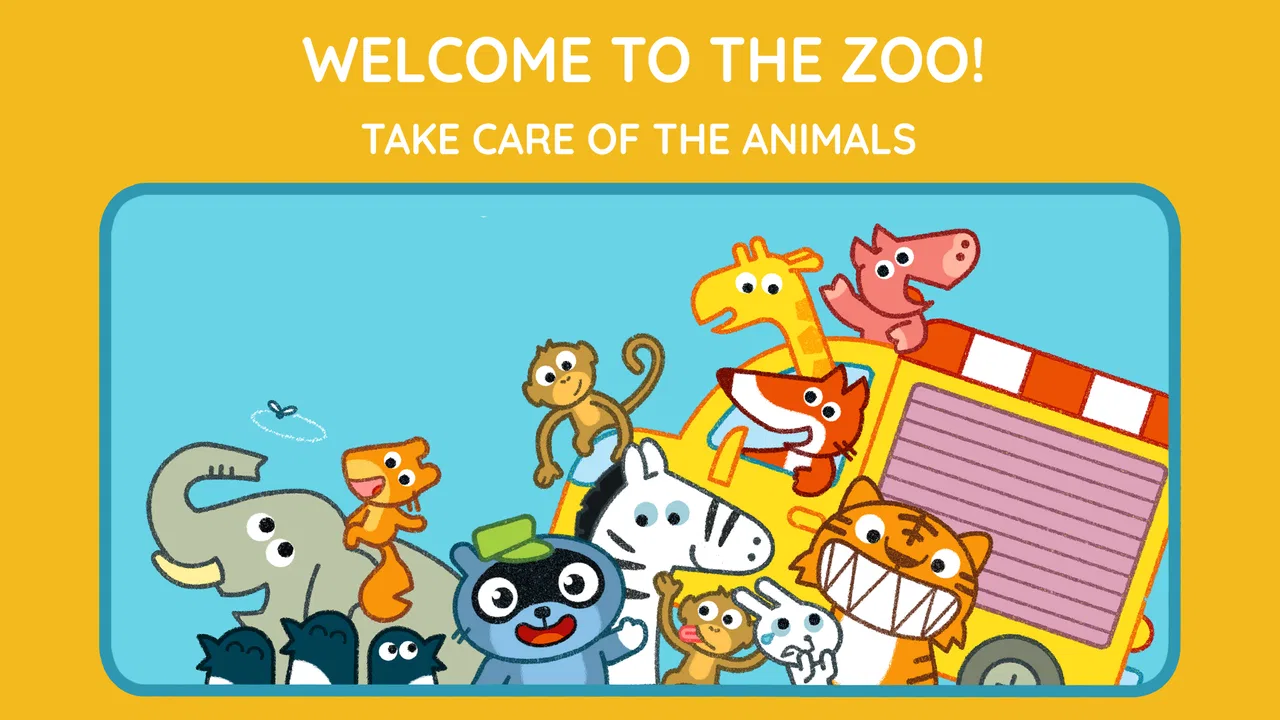
Pango Zoo - Animal Care is an interactive children’s game focused on looking after animals in a friendly zoo environment. Players can explore different areas, meet various animals, and complete simple care activities such as feeding, washing, comforting, or helping them. The game encourages curiosity, empathy, and imaginative play rather than competition or difficult objectives.
02Is Pango Zoo - Animal Care suitable for young children?
The game is designed primarily for young children, especially preschool and early elementary-age players. Its activities are generally simple to understand, with colorful visuals, gentle interactions, and an accessible interface. Children may still need initial guidance from an adult, particularly when learning how to navigate the zoo or select activities, but the overall experience is intended to be calm and easy to use.
03Does Pango Zoo - Animal Care require an internet connection?
The main gameplay experience can generally be enjoyed offline after the application has been installed, which is convenient for travel or situations without reliable Wi-Fi. However, internet access may be needed for downloading the app, receiving updates, restoring purchases, or accessing certain platform services. Parents should check the store listing and device settings for the latest requirements before installation.
04Does the game contain advertisements or in-app purchases?
Pango Zoo - Animal Care is presented as a child-friendly experience, but parents should still review the current App Store or Google Play listing because monetization details can vary by platform and may change with updates. Before allowing a child to play, check whether the version includes advertising, optional purchases, or subscription-related features, and use parental controls to prevent unintended transactions.
05What are the main benefits and possible drawbacks of Pango Zoo - Animal Care?
The game’s main strengths are its gentle pace, approachable animal-care activities, attractive presentation, and focus on empathy and imaginative play. It can be a pleasant choice for children who enjoy animals and open-ended interaction. On the other hand, older children may find the tasks too simple, and the experience may feel limited for players expecting challenging puzzles, progression systems, or competitive gameplay.
Pros
- Simple controls make it suitable for preschool children.
- Caring for animals encourages empathy and gentle behavior.
- Bright illustrations and animations keep young players engaged.
- Activities are easy to understand without reading skills.
- Offline play makes it convenient for travel or quiet time.
Cons
- Some children may find the activities repetitive after extended play.
- The game offers limited challenge for older children.
- Parents may want more detailed progress or learning reports.
- Certain features may require a paid version or separate purchase.
- Gameplay can feel slow for children who prefer fast-paced games.

Pango Zoo - Animal Care
Gallery